Table Of Content
- How to Date Old Ball Mason Jars
- Are Kerr And Ball Mason Jars the Same?
- Vintage Atlas E-Z Seal Blue Glass Canning Jar, Wire Clamp and Glass Lid, Fruit Jar, Preserves, Quart Size
- Common Questions
- Three Mason Fruit Jars Machine Embroidery Design - 3 Sizes
- Mason Jar Rings and Lids Organizer, Canning Jar Lid Organizer

3) The weight of the new jars is very close to that of the old jars, but in many cases the newer jars are just slightly lighter in weight. As can be readily discovered, there were many different “sets” of molds used over a period of many years, with this same series of (up to) 16 numbers used over and over again to identify the molds being used on a particular machine.
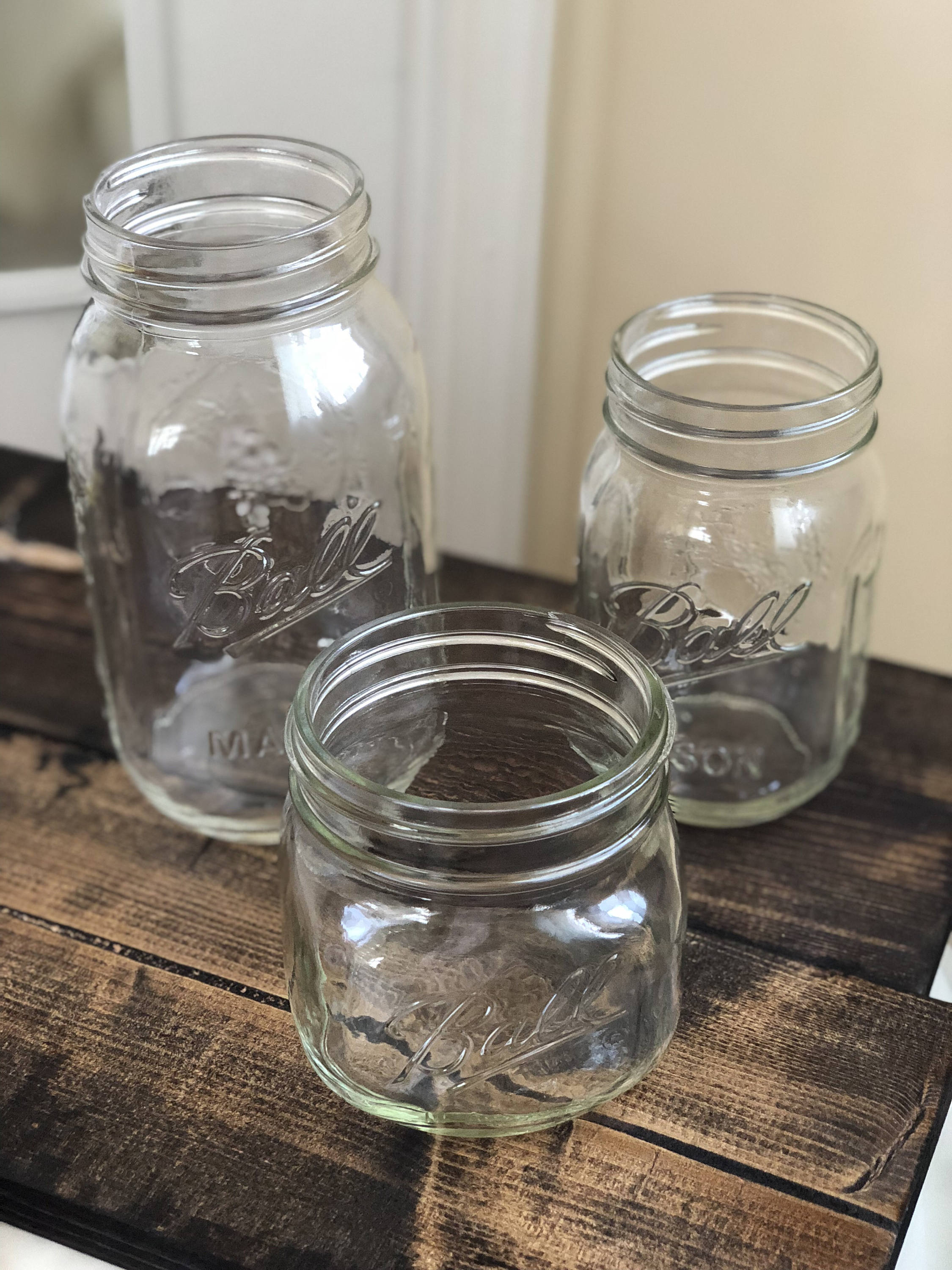
How to Date Old Ball Mason Jars
Also, there were a number of variations in the way the Ball name logo was written, those changes occurring several times over the space of several decades. When John Mason’s Mason jar patent was about to retire, Ball Brothers Manufacturing Company started making mason jars in 1884, continuing until 1993. During this time, BBMC first became Ball Brothers Company and later Ball Corporation. However, identifying and finding the price of old Ball mason jars can be tricky without knowing much about their logo markings, age, designs, and closures. Not to mention their appeal as a collector’s item which is virtually guaranteed because of the great popularity of the older jars .
Are Kerr And Ball Mason Jars the Same?
Along with the logo, you can sometimes use the color, size, and other distinguishing marks to help date a mason jar. Kerr manufactured a line of jelly glasses over many years, including small glasses (packer jars) that look like drinking glasses, and others that are shaped more like low, rounded custard or dessert bowls. On some of the earlier ones (not sure about the timeline) a so-called “Angel over crown” logo was marked on the bottom. Later variants of those types of jars may bear only a mold number, or the brand name “Kerr” in cursive lettering along with a mold number. Some dedicated and experienced antique jar collectors will say they think the number 13 jars are just as common as jars as those with other numbers. There is a definitely noticeable difference in the numbers of #13-marked jars compared to the other numbers — they ARE somewhat less common.
Vintage Atlas E-Z Seal Blue Glass Canning Jar, Wire Clamp and Glass Lid, Fruit Jar, Preserves, Quart Size
But remember, this mold number doesn’t indicate the manufacturing date or year. Standard jars are the early 1910s jars with a fanned-out mouth edge and the old wax-seal closure. Similar to Ideal Jars, Eclipse jars also have a glass lid with a round rubber gasket and metal bail. The word “ECLIPSE,” often with “WIDE MOUTH,” is embossed on the jar. Ball Lightning Jars or Ideal Jars have an airtight seal with a glass lid and wire bail clamp.
50 DIY Fall Mason Jar Crafts - Prudent Penny Pincher
50 DIY Fall Mason Jar Crafts.
Posted: Sat, 31 Jul 2021 07:00:00 GMT [source]
But remember, with age, other factors like condition, rarity, and size, also impact the final value of an old mason jar. Sure Seal jars, or Sanitary Sure Seal jars, are another version of Ball lightning jars with wire bail. In most cases, an old Ball jar can be worth a decent amount if it’s in good condition. Defects like cracks, dents, chips, and broken or chipped edges greatly depreciate the value of a Ball mason jar. The manufacturer started the production of glass jars in 1884 in its iconic aqua “Ball Blue” color. Initially, the jars were hand-made, but after the introduction of the semi-automatic glass-making machine in the late 1890s, they were all machine-made.
Many different jar molds (thousands) were used over the many years’ time these jars were being produced. Check to see if your jar has the early BBGMC logo, block letters, or the script Ball logo to get a general idea about the age. Pay attention to how the letters connect and if there is an underscore. Look for other identifying words like “improved” or “perfect” to narrow down the year, or use the jar’s color to date it. Kerr Mason Jars are an entirely different brand of jars than Ball Mason Jars, both of which are sold by Newell Brands. This company acquired Ball Corporation’s subsidiary, Alltrista, after it became a new company, Jarden, in 2002.
Three Mason Fruit Jars Machine Embroidery Design - 3 Sizes
Other colors are known, but not so easily found, including cornflower blue, straw yellow, olive green, olive amber, blackish olive, dark yellow amber, light green and medium green. Some of these colors might be known under other/different names – depending on who is describing them! If you have the opportunity, you might try attending an antique fruit jar and/or bottle show, where some of these unusually colored jars may show up for sale or in displays.
The Kerr company is best known for being producers of several kinds of fruit jars used for home canning. CO” embossed on the bottom, and in general those jars probably date mostly from about 1904 to circa 1920. Ball mason jars are a type of home canning jar made by the Ball Corporation. The company started making mason jars back in 1880, and many people today still use these for canning, or collect the jars as a hobby. There are many ways to date old Ball mason jars, and one of the easiest is to look at the logo.
However, do NOT mistake isolated bubbles and different color strikes or swirls as defects! Such manufacturing errors and rarities make the jar more valuable. 5) There is virtually no base wear, nor any light scratching on the surface of the glass which would normally be seen (at least slightly) on most old jars (although base wear can be faked). Lucky for us, this handy chart can help you keep track of all the Ball jar logos.
Also, see the entries on some other fruit jars such as the Wax Sealer style jars, and Patent November 30th 1858 jars, and the page on Hazel-Atlas Glass Company. Canning jars are like lucky charms for collectors, but only if they’re rare and old and hold some worth. I hope this guide answers all your questions regarding Ball Mason Jar values, age, and identification marks. Similarly, the patent dates “1908” and “1858” (Mason’s patent date) embossed on many Ball jars do not indicate their manufacturing years.
For more detailed information on Kerr’s Millville, New Jersey glass factory location, (where most of the KERR glass electrical insulators were made), please see my article on Whitall Tatum Company. Shipping policies vary, but many of our sellers offer free shipping when you purchase from them. Typically, orders of $35 USD or more (within the same shop) qualify for free standard shipping from participating Etsy sellers. Although a few square Ball jars from the late 1910s can also be found, the late 1880s and early 1900s jars were primarily round (cylindrical) in shape. Manufactured only briefly from the early 1900s to the 1910s, the Special Jars have a screw-thread shoulder seal. Ball Brothers Company began making Mason Patent Jars when John L Mason’s patent expired.
In general, most fruit jars in aqua or “Ball Blue” glass marked “Ball Mason” date from before the introduction of the Ball Perfect Mason. (Clear jars marked “Ball Mason” were made in the 1960s and 1970s). For an extensive list of glass manufacturers’ marks on bottles, fruit jars, insulators, tableware and other glass items, please click here to go to the Glass Bottle Marks pages (page one).
You can identify this early 1900s jar with the “BALL MASON’S PATENT NOV 38TH 1858” embossment. If you notice some extra evenly scattered tiny bubbles (not unique & isolated) throughout the jar, it’s likely a reproduction or fake. 4) The “BALL PERFECT MASON” lettering is somewhat weaker and more “sloppy” or “smeared” in presentation, especially noticeable when comparing the new and old side-by-side.
Do you have a collection of vintage Ball Mason jars in your kitchen or store room? Well, it’s time you brought them out because, according to recent research, they can be worth as much as a few hundred dollars. It seems evident that many of these jars are now saved by non-collectors or casual glass collectors (and “culled” from large groups of common jars) merely because of the number on the base. This culling out of #13 jars from among the “general population” of jars (and stashing them away) has certainly increased the perception of their scarcity. Also, it seems evident that the mold numbers 12 through 15 are ALL somewhat scarcer than mold numbers 0 through 11. This is presumably because fewer molds were produced with the mold numbers 12 through 15 — thus fewer total jars made.
I’ve noticed this through looking at the bases of hundreds if not thousands of typical Ball Perfect Mason jars while browsing at antique and collectible malls and flea markets over the last 20+ years. However, the mild scarcity, in my opinion is NOT REALLY STRONG ENOUGH to warrant the high prices which are often asked for these jars on online auction sites. Of course, value is a very subjective thing and many collectors may not agree with my opinion on this subject.
The Owens scar is always present and virtually diagnostic on the original authentic jars. Instead, the base of the new jars is relatively smooth although there may be a faint, poorly defined mold seam. Found something you love but want to make it even more uniquely you? You may think of a Ball jar with a misspelled or distinctive name embossing as worthless.




No comments:
Post a Comment